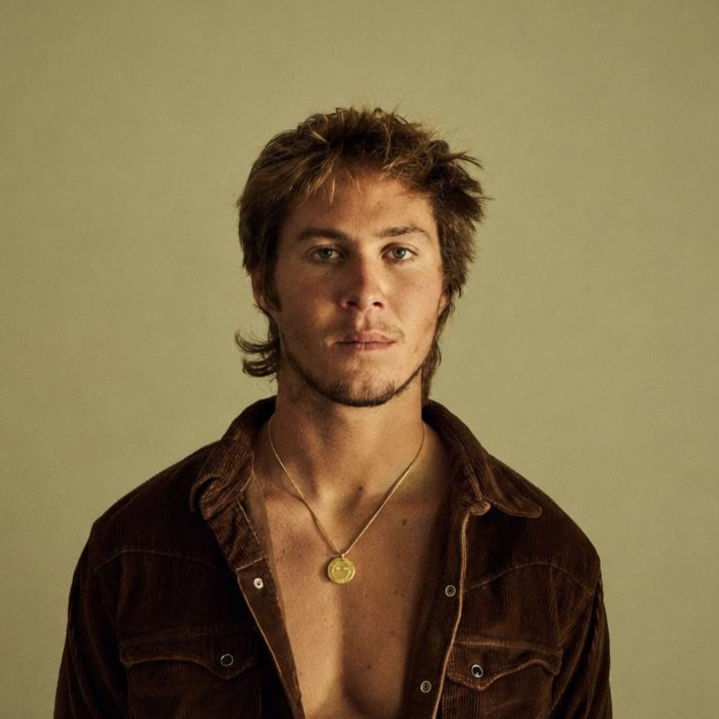
Last Letters Turns "It’s A Shame" Into A Bright, Powerful, And Emotionally Charged Alt-Rock Standout


By: Miles Carter
With "It’s A Shame," Last Letters delivers a powerful blend of intense emotion, big acoustic energy, and deeply relatable heartbreak that instantly captures attention.
We got together with Last Letters for an exciting interview to delve into the stories and happenings behind the making of "It’s A Shame" and learn more about the artist in "The Cage" Music Blog and we are excited to share it with you!
Here’s how it went:
Begin Interview:
Cage Riot: Hello Last Letters, we’re thrilled to have you here for this interview! We've had an amazing time exploring your music and diving into your creative journey. Now, we’re even more intrigued to get a deeper look into both your brand and your personal and professional inspirations.
Q. You have some terrific moments in “It’s a Shame,” especially lines like “everything’s changing and you stay the same” and “everyone I told already knew.” Those felt so hurtful and full of a major reveal, almost like friends may have held back something deeply personal that blindsided you. What were the circumstances that led to this moment and ultimately to the track’s creation?
A. I think that line came from one of those very specific breakup realizations where you find out everyone around you kind of saw it coming before you did. Which is always fun. Love being the last guy to figure out what movie he’s in.
“Everyone I told already knew” is basically about calling people after something falls apart and slowly realizing they had all been trying to be polite for a while. Not in a mean way. More in a “yeah, we were kind of waiting for you to get there” way.
The song came from that mix of being hurt, embarrassed, angry, and also a little aware that maybe I had ignored some obvious signs. Which is a very human thing to do, unfortunately. I wish it was less relatable, but here we are.
Q. The retro 2000s sound is really captured in “It’s a Shame,” but it still feels fresh and unique in its own right. How do you usually record your performances? Is your setup more DIY and home studio based, or do you bring in team elements? How did that particular method impact the final creation of this song?
A. A lot of Last Letters starts pretty DIY. Usually it’s me alone with a guitar, a laptop, too much coffee, and about eight versions of the same part that all sound exactly the same to anyone who isn’t me.
I like starting that way because it keeps things honest. I grew up on records that had some rough edges to them. The Replacements, Hüsker Dü, Descendents, Jawbreaker, Superchunk, Smoking Popes, and then later bands like The Get Up Kids, Alkaline Trio, Saves the Day, all that stuff. Those records didn’t feel perfect, but they felt alive. That’s the part I’ve always chased more than anything.
Once the song feels like it has something, I’ll bring in better ears and people who can help shape it. With “It’s a Shame,” I wanted it to feel big and emotional, but still a little worn-in. Not too polished. Like something you found in an old CD case and forgot how much it wrecked you.
Q. When you are writing a song like this that feels so vulnerable and full of expression and emotion, does it become a window into the past where you relive those moments, or does it help you cope, process, and move forward?
A. It’s definitely both. At first, writing a song like this is just reliving it, which is not always the healthiest hobby. You think you’re just messing around with a chord progression, then suddenly you’re back in some old emotional situation you thought you had already packed up and thrown in a closet.
But the more you work on it, the more it changes. It stops being this thing that happened to you and starts becoming a song. That sounds obvious, but it’s a pretty big shift. You can take something messy and give it a chorus, which somehow makes it feel a little less pathetic.
By the time it’s finished, it feels less like reopening a wound and more like making something useful out of it. Or at least something loud.
Q. Is there a standout moment in “It’s a Shame,” whether lyrical, instrumental, or both, that you feel represents the entire message of the song? Is there one spot where the song’s meaning hits you the hardest?
A. “Everything’s changing and you stay the same” is probably the line that sums it up the most.
I think the hardest part sometimes isn’t that someone changes. It’s realizing they maybe never changed at all, and you were just hoping they would. Or pretending they were someone slightly better in your head, which is a classic bad idea. Highly popular, though.
Musically, I like that the song doesn’t really ease in. It just kind of starts and pulls you into it. There’s something about that that feels right for the song. No big dramatic setup. Just, “Alright, we’re doing this.”
Q. There is something really specific about the worn-in, early 2000s energy of “It’s a Shame,” almost like it belongs to a very personal memory instead of just a genre. What is it about that era of punk, power pop, and alternative rock that still feels emotionally true to you as a songwriter?
A. I think that era still feels true to me because it wasn’t afraid to be a little uncool. And I mean that in the best way.
A lot of the music that shaped Last Letters had big hooks, loud guitars, and lyrics that felt like somebody was trying to figure out their life in real time. The Replacements, Jawbreaker, Descendents, Smoking Popes, Superchunk, The Get Up Kids, Alkaline Trio, Saves the Day. Those bands had melody and attitude, but also this weird emotional honesty that never felt too polished.
I like music that feels lived-in. A little scuffed up. Like the person making it had a bad week and decided to make it everyone else’s problem in the form of a catchy chorus. That still feels emotionally true to me.
Q. Outside of music, who or what has had the biggest influence on your personal growth or artistic perspective?
A. Probably just getting older, honestly. Which is a boring answer, but it’s true. I’m 36, so I’m at that fun age where I still feel like I’m 24, but now my back has opinions.
Getting older makes you care less about trying to impress everyone. Not in a bitter way. More like, you realize not everyone is going to get what you’re doing, and that’s fine. Some people aren’t your audience. Some people probably clap when the plane lands. You can’t build your life around them.
Outside of music, I’m inspired by old photos, used bookstores, thrift stores, weird diners, old magazines, movies that look kind of terrible but feel amazing, and places that haven’t been updated in twenty years. I like things with a little history on them. Too clean makes me suspicious.
Q. What do you hope fans see in you after experiencing this release? What do you hope they take away from “It’s a Shame,” whether it is the emotion, the retro style and sound, or something else entirely?
A. I hope they hear something honest. Not overly serious, not precious, just honest.
I like songs that let you feel something without making the whole thing feel like a therapy session with guitars. I hope “It’s a Shame” hits people in that way. Maybe it reminds them of something they thought they were over. Maybe it makes them sit in their car for an extra five minutes after parking. That’s usually when the good songs get you.
And if someone hears it and thinks, “This sounds like something I would’ve burned onto a CD for someone who absolutely did not deserve it,” then I feel like I did my job.
Q. What is the most important goal and direction for your career right now? If you had to choose one opportunity backed by a major label, would it be a headline spot on a festival, a nationwide tour, or a fully supported album release with campaign support? Which path, or maybe something else entirely, would make you the happiest?
A. I’d probably take the fully supported album release.
A festival slot would be amazing. A nationwide tour would be amazing too, although I’m realistic enough to know that touring is also a lot of gas stations, bad coffee, and wondering why your shoulder hurts from sleeping in a normal bed wrong.
But records are the thing for me. Albums stick around. They find people later. Sometimes way later. I love the idea of making something that someone discovers years from now and feels like they found it at the exact right time.
So the goal right now is to keep making Last Letters feel more real and more lived-in. I’m not really chasing the cleanest version of success. I want to make songs that feel like they meant something to somebody. That feels like a better dream than just trying to be loud on the internet for twelve minutes.
The Cage: Last Letters, thank you so much, we appreciate you taking the time to talk to us!
End Interview
We’re happy to have shared Last Letters’s exciting journey with you and uncovered such inspiring insights about their creative process.