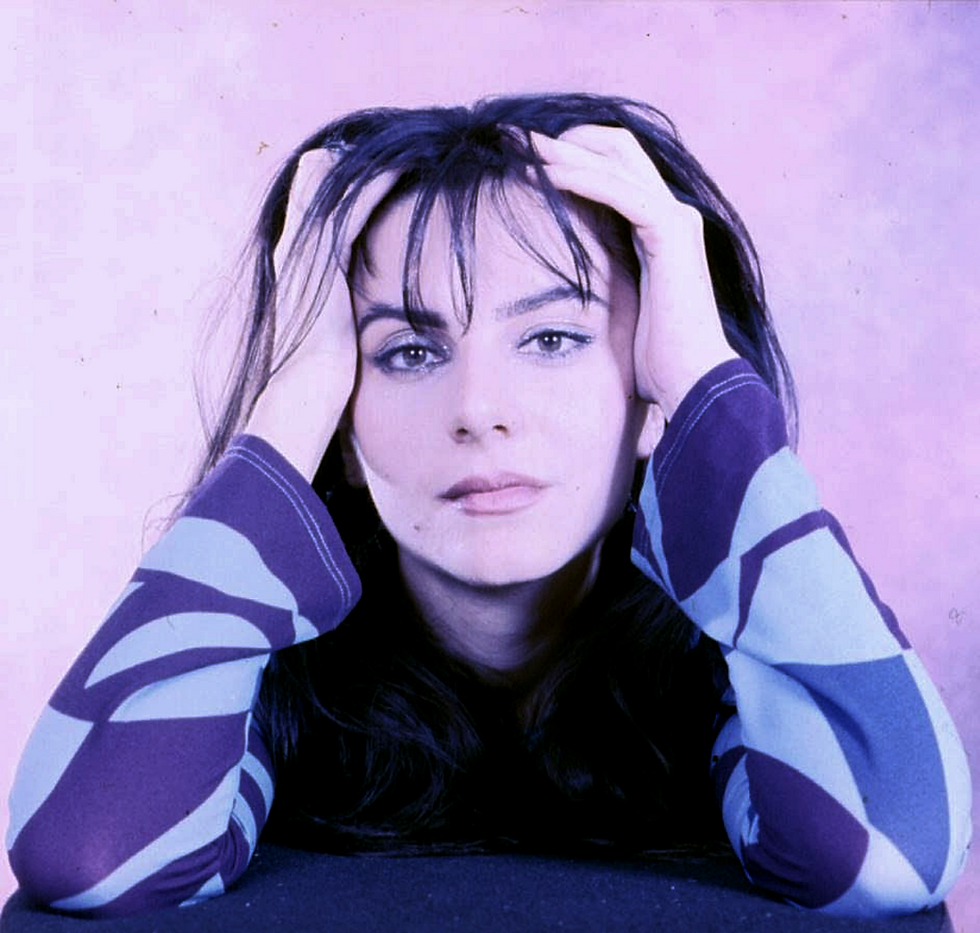
Dalinda Unveils The Remarkable Beauty Of "The Nile" In A Heartfelt Tribute Rich With Emotion, Culture, And Grace


By: Miles Carter
Dalinda's "The Nile" Is A Powerful And Beautifully Crafted Reflection On Memory, Identity, And The Enduring Bonds That Shape Our Lives
We got together with Dalinda for an exciting interview to delve into the stories and happenings behind the making of this latest release and learn more about the artist in "The Cage" Digital Magazine and we are excited to share it with you!
Begin Interview:
The Cage: We’re thrilled to have you here for this interview! We've had an amazing time exploring your music and diving into your creative journey. Now, we’re even more excited to get a deeper look into both your brand and your personal and professional inspirations.
Dalinda, we loved the way you blend genres, cultures, and emotional worlds into music. The parts of the story we discovered about the song left us completely intrigued. We learned that your mother’s portrait graces the cover artwork and that she was the inspiration behind this deeply personal release.
Q. What does the title “The Nile” mean to you, and how does it connect to your mother’s story? More importantly, what do you hope listeners take away from the emotional journey and message at the heart of the song?
A. “The Nile” was the first song I ever wrote. I went to the studio, armed with my guitar and enthusiasm, and when I came back with a recorded CD demo, I played it for my number one fan, my mother. She did not speak English, but – she could not hide the tears on her half-turned face. And in that single moment, I suddenly realised that she, my mother, and her grief - that was my Muse. My father passed a few years earlier, and at times, most of the times, I felt his loss more while seeing my mom. “The Nile” was my young heart’s attempt to understand this impossible abyss of the eternal sadness of losing one’s world.
As for the message at the heart of the song…” The Nile” is a love song. A love that was brighter than the stars, a love that was older than the Nile’s flow, and a love that was lost. A love that left, and its leaving could never be accepted. It is about the love that fills the soul and enters the pores and without which everything loses its point. Maybe it is about the love we all wish to have once in our life, and maybe
it is about the love we all fear to have. What I would hope above all is that the listeners find the freedom to step into the space of the song, for the song to become their own mirror, their own voyage. After all, songwriters are, I believe, here to provide the vessels for their listeners’ journeys.
We saw that you mentioned “zero samples,” and that immediately stood out to us. In a time when so much music is built from borrowed pieces, that felt refreshing and intentional.
Q. Can you tell us how “The Nile” was created, what instruments, sounds, or textures shaped it, and why building the song this way matters to you as an artist?
A. There were no samples used, indeed, and it was all done with live instrumentation and natural tuning on the vocals. A tapestry of melodies and sound textures, created and played on guitars and bass by Pete Murray were added to the main melody of the song, while Siemy Di was on percussion, a master and veteran in his own right, providing us with an unobtrusive, elegant rhythmic anchor. Vintage microphones were used to capture the 1960s era - we wanted to sound ‘old’, but thematically relevant, not unlike my mother’s picture that has been used as the track’s artwork.
All this followed the basic and, in a way, universal idea that grief is never polished, love is never perfect, yet it is precisely that, those vibrating, almost subliminally perceived, human waves that render the emotions exactly as they are, uncovered and true.
After reading that “The Nile” is a deeply personal exploration of love and loss, we wanted to understand more about the emotional place it came from.
Q. When you perform “The Nile” live, does it make the emotions feel heavier, does it bring you comfort and healing, or does it become something completely different once you share it with an audience?
A. The Nile has just been released very recently, so there was no chance, yet, to inhabit it live, either for me or for my audience. Emotions shift over time, songs grow older…Yet songs can, in an instant bring everything back, even those feelings one had almost forgotten they ever had. Patients with dementia cannot recall their own names, but many remember the lyrics or the melodies that meant something to them. Whether one wrote it, or was shaped by it in any way, a minuscule twenty-fourth of a second of a frame in one’s mind, that directly links to the very moment of creation, or the encounter, sems to be impervious to time. “The Nile” for me will always be my mom standing in front of the glass of our French doors in Tripoli, stoic and straight backed in her tremendous grief, half face turned, with a tear she tried to hide.
Q. How did you first connect with producer Pete Murray, and what did he bring to “The Nile” that helped elevate its emotional depth?
A. The Nile is not our first collaboration. When I started my own label and embarked on creating songs that marked a departure into more personal, possibly more genre-fluid vibe, Pete was the producer who was able to interpret my, at times, hard to explain thoughts and whose vision was in alignment with my own. We exchange ideas, use colours, moments in time, anecdotes, films, art, as references, and it helps that we know each other well. As we worked on The Nile, the river itself gave us the visual target, for example…the expanse and width of the music that Pete created to carry the melody of the vocals, and that needed to flow like a river and glitter like a moonbeam. There was no worry about the genres, it was the interpretation of the idea, of the feeling…
One part of your story that truly moved us was learning that you were born to Bosnian parents, raised in Libya, and are now based in the UK. That kind of multicultural journey feels inseparable from the emotional power of your music.
Q. How have those different worlds, cultures, and life experiences shaped the way you write, sing, and tell stories through music?
A. The question I find difficult to answer is ‘where are you from?’ I am a bit from everywhere, the Balkan/Slavic melancholy, the North African beat, my call of the wild, they find their way into the stories I tell; London, on the other hand, was and still is, very much ‘my city’, it adopted me and allowed me to find some glimpses of its face in my own. It’s all nature, nurture and our own spark we have within. We adapt, we adopt, and eventually, realise that the concepts we run away from, are equally us, as those that we run towards.
Your debut album Turquoise was produced by the late Hossam Ramzy, whose work with artists like Shakira, Peter Gabriel, and Page & Plant made him such an influential figure in global music. That kind of collaboration says a lot about the rare quality he must have heard in you.
Q. What did working with someone of that level teach you about your own artistic strengths, and how did that experience help you understand your own musical “superpowers”?
A. I owe the late Hossam Ramzy so much, and I still cannot believe he has left us. Working with him happened very quickly after my arrival to the UK and being taken under his wing was an immense honour – what he saw in me was the bridge where the foreign beats and tunes could merge and cross over, in a way what he was musically and possibly in his heart, too. The lessons learnt still do, even to this day – appear uninvited, and I find myself applying something I wasn’t even aware of absorbing then. Through Hossam I also got to collaborate and work with global level musicians and artists, and he himself possibly paved the way for my need to develop my true song-writing expression; to not be afraid to push for what I believe in musically, to not be a conformist…at the end of the day, he was the first one to insist on my using my real name as my artist name.
From your chart success in the Middle East with Hamid AlShairi on “Leish,” to sync placements with MTV’s The Sarah Silverman Show, electronic and tribal collaborations, and albums like Waternixie and Songs from Libya, your path has been filled with powerful milestones.
Q. Looking back at those accomplishments, which moment stands out as one you will never forget, and how did it help shape the artist and person you are today?
A. It is pretty awesome to see and hear people sing along with you and know all the lyrics…maybe that could be a quantifiable success of a kind. Memories like those are beautiful, powerful and humbling. But, I think, creating the music that truly is the expression of one’s essence, regardless of the potential genre barriers or trends, and finding out it reaches and touches a stranger, that is what I think is the best feeling.
Q. Finally, what is the next big goal you hope to conquer? Is it touring, creating more music, reaching new audiences, or something entirely different? We'd love to know what the next chapter of your journey looks like and where you hope it will take you.
A. I think my goal is to continue writing songs that explore, tell stories and allow me to reach new audience; there are more tracks that will follow “The Nile”, currently ‘under construction’, and then some surprises involving EDM. Sometimes it is all about the journey, after all.
The Cage: Dalinda, thank you so much, we appreciate you taking the time to talk to us!
End Interview
We’re happy to have shared Dalinda’s exciting journey with you and uncovered such inspiring insights about their creative process.