Jordan Kinsey Breathes Raw, Gritty Blues Fire Into "Sunday Kind Of Love"

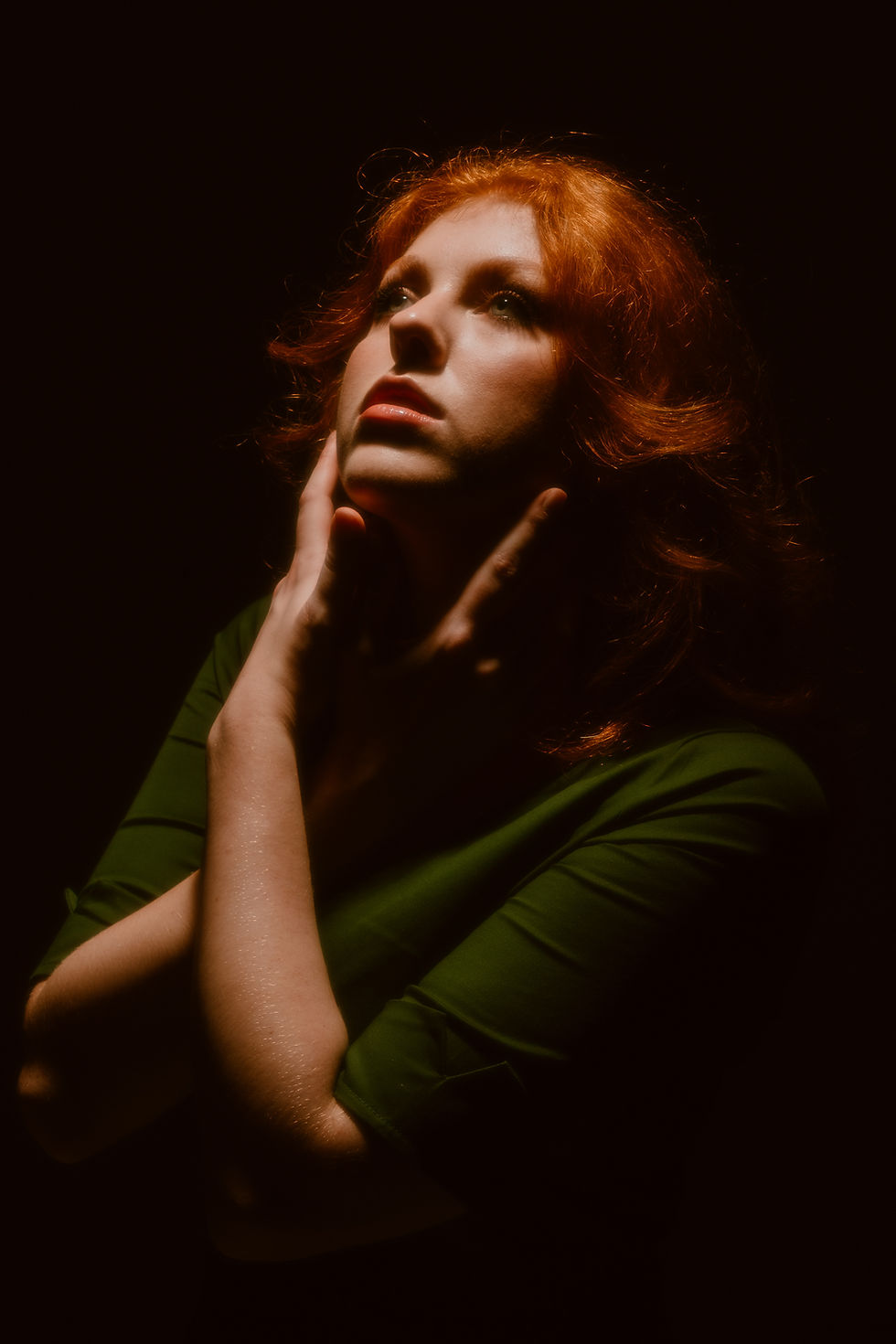
By: Miles Carter
The Cage: We got together with Jordan Kinsey for an exciting interview to delve into the stories and happenings behind the making of this latest release and learn more about the artist in "The Cage" Digital Magazine and we are excited to share it with you!
BEGIN INTERVIEW:
Hello Jordan Kinsey, we’re thrilled to have you here for this interview! We've had an amazing time exploring your music and diving into your creative journey. Now, we’re even more excited to get a deeper look into both your brand and your personal and professional inspirations.
We loved your rendition of "Sunday Kind of Love." Taking on a song connected to Etta James is not exactly the easy road, but you really crushed it. Your vocals are perfect for this style of music. You have this powerful and bright delivery, but it also lands with a gritty, unique edge that carries the emotion through each phrase. That alone brings so much excitement to the performance. Then the musical support breathes new life into the song, giving it this raw, gritty character we never could have imagined.
Q. Jordan, with your version of "Sunday Kind of Love" carrying this raw vocal presence while still honoring the emotional weight of Etta James’ original, what made you choose this blues-styled delivery? Was there ever another direction you considered before landing on this one?
A. Thank you so much! I have loved “Sunday Kind of Love” for so long; it’s one of those songs that, when it comes on in the car, feels mandatory to sing along to. So, it was really important to me to keep the original soul of the song while still making it my own. I immediately knew I wanted to go more bluesy and modernize it a bit with an electric guitar and some grit. “Sunday Kind of Love” is all about wanting this specific kind of love to find you, and that is such a passionate thing. And to be honest, I couldn’t think of a genre more passionate than the blues. The process of recording this song was so seamless; everything just really fell in line, and it was one of the quickest songs I have ever recorded. I only sang it through a couple of times, and everything else got laid down really smoothly as well. The biggest thing for me throughout the recording process was maintaining the song's emotion.
Q. You started performing at just 12 years old in bars, restaurants, and festivals, which is such a valuable way to learn music in real time. Looking back now, how did those early live experiences shape the artist and performer you are today?
A. Performing that young, you get really comfortable, really fast. When I was a kid, I was so much more fearless than I am now. I honestly think I am probably more nervous about getting on stage now, with 10 years of experience, than I was the first time I ever got on stage. I first got into performing with this band, and we would do Led Zeppelin, Queen, Metallica, Guns N’ Roses, etc. All the classics. If you can imagine a little twelve-year-old me with a big side part, bleached ends, a Ramones T-shirt, and zipper pants, up on stage at a bar singing “Dazed and Confused”. With that band, we did bars, festivals, and all sorts of gigs. After that, I formed an acoustic duo, which taught me a lot about how to talk to people. The importance of communicating and creating a connection with everyone around you. Then, when I was 18, I decided to go solo. That was a big step for me because for the first time, I had to get up there all by myself. All these experiences have shaped me so much as a performer and as an artist because I was able to make the stage my home so early on. I think that was really important for me because once you’re comfortable, you can really just be yourself and have fun.
Q. We read that you are also studying audio engineering and preparing to release fully self-produced music, which is really exciting. Has learning the technical side of recording changed the way you hear your own songs, and do you see yourself eventually engineering for other artists as well, or mainly focusing on your own work?
A. Learning the technical side of recording has really changed the way I hear my songs, because it has opened up a whole new world of how to think about music. Before beginning my audio journey, I was very focused on writing, instruments, melodies, etc., and while I am still very focused on those things, it has shifted. Now my thought process has become even more creative. When I am recording vocals, for instance, I am not just thinking about my vocal performance. Now I think about my vocal performance, the microphone I want to use, the pre-amp, the compressor, etc. I feel like audio has really allowed me to become more involved in my music, in a way that I haven’t been previously, and I get to be more selective and expressive. I have also started working as an engineer and producer with other artists, which has been really exciting. I love focusing on my own work, but it is really fun to get to work with other people who are super talented and creative. It is such a privilege to be part of other people’s creative processes and watch their ideas become fully realized, finished projects.
Q. Etta James is undeniably a queen and one of the most influential voices to ever do it. Are there other artists who have strongly influenced you, and what do they mean to you musically? Do you have any plans of who you might do next?
A. I honestly have had so many artists make a big impact not just on my music but on my life. For this song, I pulled a lot of inspiration from “Damn Your Eyes” by Etta James, Dorothy Moore, and Christone “Kingfish” Ingram. As a kid, my voice teacher introduced me to a lot of R&B and blues, and much of what I learned to sing early on came from these genres. She had me singing “Misty Blue” and listening to Muddy Waters before I was in the 5th grade. Nowadays, in my original music, I tend to write more alternative, and on the vocal front, I have been enjoying digging into some jazz, but the influences I was introduced to as a kid are something that will always be a part of me and forever impact me as a musician. Currently, my plan for my next release is to release an original song, but I just finished mastering a cover of “Ain’t No Sunshine” I did with a friend, and I plan to release that in the near future as well.
Q. How would you describe your genre and overall style as an artist? When it comes to your writing, does your inspiration usually come from love, life experience, personal reflection, or something else entirely?
A. I would describe my genre and overall style as an artist as mostly alternative, with blues influences and a bit of folkiness. When I sit down to write, I would say 99% of the time, I find inspiration through my relationships. This includes romantic relationships, friendships, my relationship with a higher power, and my relationship with myself. I feel that relationships are among the most beautiful things we, as people, can experience. The good times, the bad times, the mundane times, being a witness to other people’s lives, it is such a human experience. I really try to communicate that in my writing because it is so unique to us.
Q. Nashville is such a powerful music city with endless resources and opportunities for artists. Do you feel that environment has helped you grow, or can the sheer volume of people creating music there ever become distracting or difficult to navigate?
A. Nashville has helped me grow tremendously. I have been here for almost 4 years, and I can say I am so much better and more confident in my musical abilities. At times, Nashville has seemed really daunting, especially whenever I first moved here, because there are so many talented people and so much opportunity. When you move somewhere, and everyone is good at the thing you want to do, it can be hard to remember that it’s a community, not a competition. So many people I have met here have been so helpful on my journey, and it is a great feeling to share a sense of community with people who are passionate about the same thing as you.
Q. Outside of the music itself, what has had the biggest impact on your decision to choose music as your career?
A. I think the biggest impact on my decision to choose music as my career has been my family. I am extremely fortunate to have a family that supports my dreams and has only encouraged me to keep pursuing music in any way that I can. Since I can remember, music has been the only thing I really wanted to do, and my parents really pushed me to take lessons and start performing. They saw something in me, and they chose to believe in me. They continue to believe in me even when I forget to believe in myself. I feel like I have to pursue a career in music, not just because I love it, but because I want them to be proud of me. I need them to know that all of the time and energy they have put into me was worth it.
Q. What is the most important goal for your career right now? If you had to choose one major moment, would it be a big one-day festival, a nationwide tour, or a fully supported album release with label-backed campaign support? Or is there another path that would make you happiest?
A. The most important goal for my career right now is to be able to do everything. There is nothing that would make me happier than to write, produce, perform, and engineer. It is probably a crazy goal to have, but I want it all. I have never wanted anything in my life the way that I want to do music. To be a part of the entire process from an idea to a demo, to a master, and then on stage, what more could a girl want? The more I can learn to improve each of those aspects, the more I can work my way up to doing it all.
The Cage: Jordan Kinsey, thank you so much! We appreciate you taking the time to talk to us.
End Interview
Tap in below and experience it for yourself.


